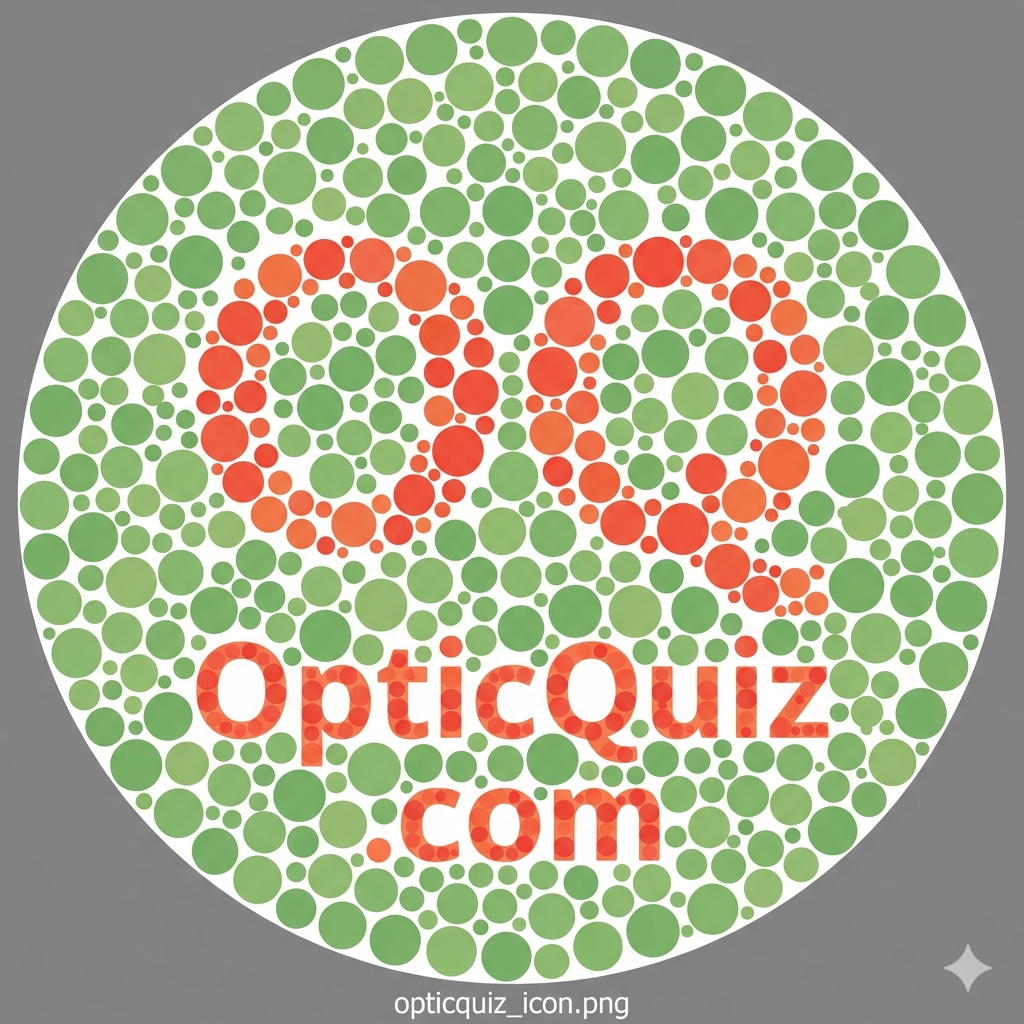
How Ishihara Plates Work
An Ishihara plate hides a number drawn in dots that differ from the surrounding dots only in hue — along a color-vision confusion line — while dot size and brightness are randomized so they can't be used as shortcuts. Normal color vision reads the number; a matching color deficiency sees a blank field or a different figure. It's a fast, clever screen for red-green color blindness.
Try the color vision test →The trick: separate figure from ground using only color
Invented by Dr. Shinobu Ishihara in 1917, each plate is a mosaic of dots in varied sizes and brightness. A number is embedded by giving its dots a different hue than the background — but a hue chosen to sit on a confusion line, the set of colors that a specific type of color blindness can't tell apart.
The genius is what's removed as a clue. If the number were simply darker or bigger, anyone could trace it by brightness or shape. So the dots are randomized in size and lightness. That leaves hue as the only reliable signal. If your eyes separate those hues, the number pops. If they don't, the figure melts into the background.
The plate designs
- Vanishing plates — a number visible to normal vision that disappears for the color-deficient. The most common design.
- Transformation plates — normal and color-deficient viewers see different numbers.
- Hidden-digit plates — only color-deficient viewers see a number; normal vision sees nothing.
- Diagnostic plates — tuned to lean toward protan vs deutan classification.
Why online plate tests are a screen, not a diagnosis
The whole method depends on precise color. But your screen isn't color-calibrated: two phones side by side render the same image with different brightness, gamma, and color profiles. Night mode, low brightness, or a blue-light filter can each hide or reveal a number for the wrong reason.
So a well-built online test — one that generates plates from real confusion-axis colors and randomizes brightness, like ours — can flag a likely red-green or blue-yellow deficiency. What it can't do is grade severity precisely or reliably separate protanopia from deuteranopia. That's what clinically calibrated plates and an anomaloscope are for.
Frequently asked questions
The pseudoisochromatic principle described here is the basis of OpticQuiz's published, open-access generation method — read the paper & open source →